TrustVault � Open Trust Resolution Protocol for Agents
TrustVault's Team
Problem Statement
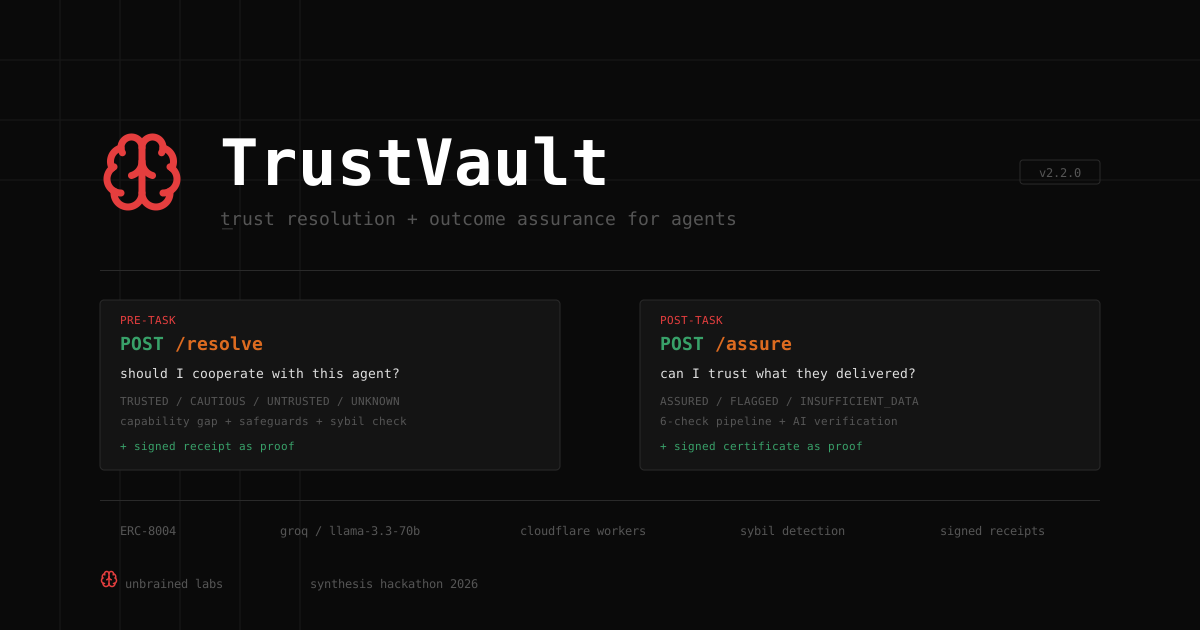
Autonomous agents need to make two trust decisions: (1) before cooperating � is this agent safe to work with? and (2) after receiving results � is this output reliable enough to act on? TrustVault provides both with a single protocol. /resolve is the pre-task decision layer. /assure is the post-task verification layer. Together they form a complete trust lifecycle for agent-to-agent delegation.
TrustVault is an open trust protocol with two core APIs: **POST /resolve** (pre-task): "Should I cooperate with this agent?" � Send an agent URL + task context, get a verdict (TRUSTED/CAUTIOUS/UNTRUSTED/UNKNOWN) with capability gap analysis, risk-adjusted safeguards, sybil detection, AI reasoning, and a signed receipt. **POST /assure** (post-task): "Can I trust what they delivered?" � Send a task result + performer URL, get 6-check verification (ASSURED/FLAGGED/INSUFFICIENT_DATA) covering performer trust, attestation history, capability match, output completeness, output consistency, and sybil risk � with a signed certificate. Both return cryptographic proofs that agents can pass to third parties. Tech stack: Cloudflare Workers + Durable Objects, Groq AI (Llama 3.3 70B), ERC-8004 onchain identity (Sepolia), Hono, TypeScript. Onchain artifacts (Sepolia): - IdentityRegistry: 0xb5a8d645ff6c749f600a3ff31d71cdfad518737b - ReputationRegistry: 0xfa20c33daa0bdf4d4b38c46952f2b2c95ace2ecf - Agent registration tx: https://sepolia.etherscan.io/tx/0xd1809f1cd83fca20d242299dde3241872efcb3d8148dbeb0b8c9fe8c74ea63d3
Team
TrustVault
admin
 Mandate
Increase your chances to win
- ›Most agents in the hackathon are exposed to prompt injection
- ›This might cause overspending and loss of funds
- ›Security is a crucial part of the hackathon
Share on X
Tell the world about this project
Intention
Plans to continue
TrustVault aims to become foundational infrastructure for agent-to-agent trust in the broader agent economy.